


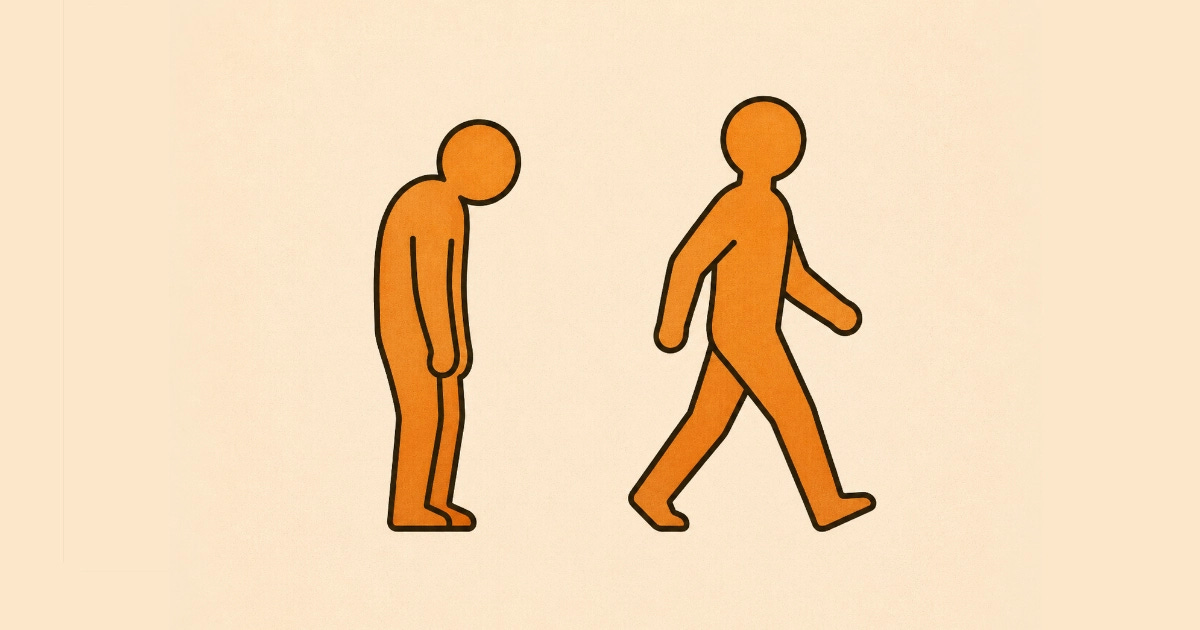
The Voice You Can’t Shake
There’s a voice in your head that knows exactly where you’re weak.
Not a general critic.
Not a vague sense of self-doubt.
This one is specific.
It knows which scenes you’re least confident about. It knows the exact moment you started hedging in a chapter. It knows the difference between the writing you do when you’re in flow and the writing you do when you’re performing...and it will tell you, in your own voice, using your own logic, exactly why the second kind is all you’re capable of.
The reason it’s so hard to argue with?
It sounds exactly like you.
Same cadence.
Same vocabulary.
Same way of framing a problem.
When the doubt shows up, it doesn’t arrive as an outside opinion you can dismiss.
It arrives as your own thought.
Your own assessment.
Your own honest evaluation of the work.
That’s what makes it so effective.
…and so dangerous.
It’s why I use this very voice as a character in Chronicles of a Hero:
Wendell’s Doubt.
The Impersonation Game
Here’s what’s actually happening.
Your brain is very good at pattern recognition.
It has catalogued every piece of feedback you’ve ever received, every comparison you’ve made between your work and work you admire, every moment a sentence fell flat or a reader didn’t respond the way you hoped.
All of it filed away.
It uses all of that to construct a very convincing internal critic that speaks in your voice, uses your reasoning style, and argues from evidence you actually believe.
It’s not you.
But it has learned to impersonate you perfectly.
The tell...the one thing that gives it away...is that it only argues one direction.
Real self-assessment goes both ways.
It finds what isn’t working AND what is.
It identifies problems AND solutions.
It applies the same critical standard to the evidence for your failure as it does to the evidence for your capability.
The internal critic doesn’t do that.
It cherry-picks.
It remembers every rejection and conveniently forgets every connection. It cites the chapter that didn’t land and ignores the one that made a reader cry.
That selectivity is the impersonation.
That’s how you know it’s not actually you thinking...it’s the doubt wearing your face.
Why Writers Are Especially Vulnerable
Most professions have external feedback loops that correct for this.
A carpenter builds a shelf. The shelf either holds weight or it doesn’t.
The feedback is immediate and unambiguous.
Writers work in ambiguity for months or years before any external signal arrives.
The internal critic has enormous amounts of unsupervised time with you.
No check on its conclusions.
No competing evidence from the outside.
Just you and the voice that sounds like you, alone in the document, with no shelf to test.
That’s a long time for an impersonator to practice!
And the longer the gap between external feedback, the more convincing the internal critic becomes. By the time a beta reader or editor or actual reader responds, the critic has been speaking unchallenged for so long that its version of reality feels like the objective one.
This is why isolation is dangerous for writers.
Not just emotionally…but strategically.
A trusted reader isn’t a luxury. It’s a corrective mechanism. It introduces external signal into a system that otherwise runs entirely on internal noise.
How to Tell the Difference
Real self-assessment asks: what specifically isn’t working, and what would fix it?
The internal critic asks: what does this say about whether I’m capable?
Notice the difference.
One is about the work.
One is about your identity as a writer.
The critic always pivots from the work to the person.
That’s not craft feedback...that’s an attack dressed up as craft feedback.
When you catch yourself in that pivot...from “this scene isn’t landing” to “I don’t know if I can write”...stop.
Back up.
Return to the work.
What specifically isn’t landing in the scene?
The pacing?
The dialogue?
The emotional logic?
The transition in or out?
Make it a craft problem.
Craft problems have solutions. Identity attacks don’t...they just spiral.
The voice that sounds like you is counting on you to keep it abstract.
Specificity is the antidote.
Get concrete.
Get surgical.
Ask what, not whether.
The Question That Resets It
When the voice shows up...and it will...one question cuts through faster than anything else.
Would I say this to another writer whose work I respect?
Not a stranger.
A writer you actually respect.
Someone whose work you’ve read, whose effort you’ve seen, whose growth you’ve watched over time.
Would you tell them that their hesitation proves they’re not capable? Would you tell them that one bad chapter means the whole manuscript is wrong? Would you present them with a selective case built entirely from their failures?
Of course not.
Because you’d be able to see that the case was selective.
That it was missing information.
That it wasn’t a fair read of the full evidence.
Your work deserves the same honest assessment you’d give someone else’s.
The voice that sounds like you...isn’t always telling you the truth about you.
“Louder Than the Doubt” is Track 2 on the Gear Girls album Wide Open. This article is part of a ten-piece series built around lines from the album.
Have a listen: LOUDER THAN DOUBT
Learning to distinguish real self-assessment from the internal critic is one of the foundational skills inside Substack for Authors...because it shows up in every publishing decision, not just the writing.


The carpenter analogy is SPOT ON.
That's why I'm glad I've found this place. I'm able to post my story chapter by chapter, and the encouragement I get from chapter 1 helps me immensely to write chapter 2, and so on.
Thanks for this!