


Hello, my friend.
Since the last article, many have reached out and asked me questions, so I’d like to clarify something before we get started here…
This is personal to me. These experiences.
You’ve asked me to share what I do, how I do them and even WHY I do them…and how I’ve been able to accomplish a measure of success in all my writing adventures.
Honestly, I didn’t want to teach anything.
I like being invisible, sitting in my secret office, talking to people who don’t exist and rubbing shoulders with mägo, heroes, and creatures so old they make Cher seem young.
All I want to do is help you.
…because I want you to be successful…whatever that means to you.
This is me, trying in my awkward way, trying to help you.
As I tell everyone…I am a perfect walking example to everyone else.
…even if that example is what NOT to do.
Alrighty, I’m done.
Moving on.
Last time, I defined Excitable Value.
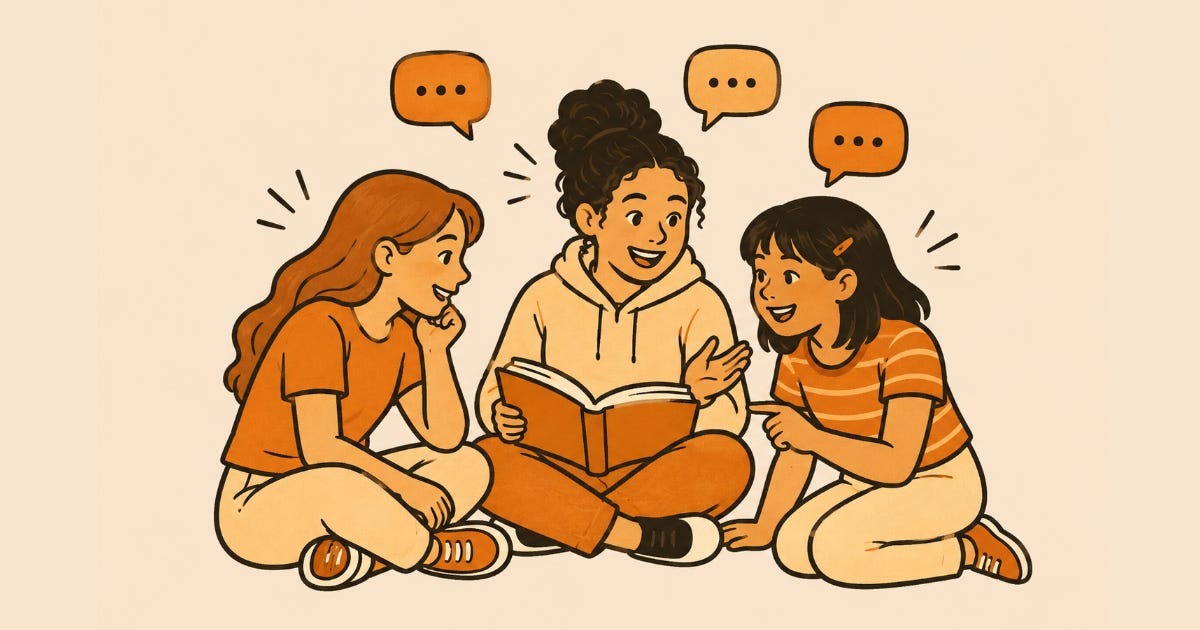
The short version: it’s the quality that makes a reader close your book, look around for someone nearby, and say, “You need to read this.”
Not “I liked it.”
Not “it was pretty good.”
The thing that makes keeping it to themselves feel almost impossible.
I know, I know.. “Jaime, this is all great in theory, but how do we DO that?”
You’re SO impatient.
Let’s get practical.
I want you to understand that Excitable Value is not luck.
It is not genre.
It is not the size of your marketing budget or whether you know the right people or whether some influential reviewer happens to trip over your book on a Tuesday.
It is craft.
And it can be built.
Here’s how.
Start With a Character They Can’t Leave
Everything else on this list matters. But none of it works if the reader doesn’t care about the person at the center of the story.
Not like.
Care.
Those are different.
I’ve liked characters I’d forget by morning. I’ve cared about characters who kept me up at 2am, staring at the ceiling, legitimately worried about a fictional person.
That second thing is what you’re after.
What creates it?
One thing, reliably, above all others: the reader has to see themselves in the character.
Not the circumstances.
Not the fantasy-world-magic-powers or the detective job or the post-apocalyptic survival skills.
The interior of the character.
The fear underneath the confidence.
The hope they’re embarrassed to admit.
The wound they’re still working around without knowing it.
The small private thing they want that they’d never say out loud.
When a reader sees that... and recognizes it as their own... something shifts. The character stops being a character. They become a person. And you do not abandon people.
It’s why I created Wendell.
He’s the best choice I could think of, and why I tell readers, “He’s just normal.”
That may not seem like much, but to a teen, Wendell is likely in their circle of friends. He’s the one they’d eat lunch with, and hang out with.
Heck, one of my first reviews said, “Wendell is someone I’d like to date.”
Date.
Readers relate to the person who is trying to figure out who they are and trying to be something more.
Give Them Choices That Actually Cost Something
Here’s a fast way to find out if your story has Excitable Value: look at the last three choices your protagonist made. Now ask, could they have chosen differently without it costing them anything real?
If the answer is yes... those aren’t choices.
They’re plot steps.
Real choices are the ones where something is genuinely on the line.
Not just outcome.
Values.
Identity.
Relationship.
The thing they believe about themselves.
The choices readers talk about are always the ones where both options hurt. Where the protagonist can’t win cleanly. Where choosing one good thing means losing another, or where doing the right thing costs more than they thought they could pay.
Those are the scenes readers replay.
Those are the moments they describe to their friends.
Not “and then the dragon showed up.”
The moment the character had to choose who they were going to be when it actually cost something to be that person.
Build those moments deliberately. Don’t let your protagonist off easy when the story arrives at a fork. The more loaded the choice, the more it sticks.
Emotional Stakes Are Not the Same as Physical Stakes
This one is subtle, but it matters a lot.
Physical stakes are “will the character survive?” Emotional stakes are “will the character become someone they can live with being?”
Physical stakes are useful.
They create urgency.
Readers want the protagonist to live.
But emotional stakes are what create investment.
Readers don’t just want the protagonist to survive.
They want them to be okay.
They want them to figure it out.
They want them to find what they’re looking for, even if they don’t know exactly what that is yet.
Physical stakes without emotional stakes produce a thriller that’s fun to read and gone from your memory in a week.
Emotional stakes, running underneath everything else, are what make a story stay.
Ask yourself: what does your protagonist stand to lose emotionally in this story?
Not their life.
What belief about themselves, what relationship, what version of who they hoped they’d be?
What is the internal cost if they fail?
Name it.
Then make sure the story is actually threatening it.
The emotional stakes with Wendell have always been internal conflict…dealing with the expectations and doubts about himself. For crying out loud, he’s a KID. Yet he’s expected to make choices that would cause most adults to flee for their lives.
…and that’s just it: The right choices Wendell has to make WILL threaten his life.
Will he survive?
Read the books and find out.
Memorable Moments Are Built, Not Stumbled Into
Every story with Excitable Value has at least a handful of moments that readers remember years later.
Not scenes, exactly.
Moments.
A line of dialogue.
An image.
A choice.
A quiet beat after something loud.
These don’t happen by accident.
The writers who produce them are doing something specific: they’re paying attention to what the story has been building toward, and they’re letting it arrive with full weight.
They don’t rush past the moment to get to the next plot point.
They stop.
They let it land.
The moment your character finally says the thing they’ve been unable to say for two hundred pages... that’s a moment.
Let it breathe.
The moment the reader realizes something before the protagonist does, and has to watch it unfold... that’s a moment.
Don’t move past it too fast.
The moment the world reveals itself to be larger or stranger or more heartbreaking than the reader expected... stay there.
Memorable moments are the ones where you trust your reader enough to be quiet.
To stop explaining.
To let the weight of everything that came before do the work.
Most writers rush past them.
Don’t.
Mystery, Wonder, and the Art of Not Explaining Everything
Readers talk about the things they’re still thinking about.
If you answer every question your story raises, you’ve given readers nothing to carry out the door.
You’ve completed the transaction.
They consumed the story.
Done.
NOOOOOOOOoooooo….
If there are things left UNresolved... things hinted at, glimpsed, implied but not explained... the story doesn’t end when the book closes.
It continues in the reader’s head.
They keep turning it over.
They want to talk about it, because talking helps them think, and they’re still thinking.
I wrote a short story that’s linked to Chronicles of a Hero, called Rent.
The intent was to link to the current serial chapters being released, plus link in music we’d released onto Spotify…all back to a single event.
…a factory accident.
In Rent, I left only hints of information…not about the characters in that short story, but what’s connected to them, and the series itself.
This is not the same as a cliffhanger or a cheap withhold. I’m not talking about yanking answers away to manipulate readers into buying the next book.
I’m talking about the genuine feeling that the world is larger than what you showed. That there are histories here that predate the story. That characters have interior lives that extend beyond the scenes you wrote. That something is going on underneath the surface that will eventually mean something.
That feeling of depth is what creates wonder. Wonder is what makes readers browse your website, look for maps, ask questions, imagine things you didn’t write.
They are building the world alongside you.
That’s what you want.
Humor Is Not Optional
I know, I know.
You’re writing something serious.
Something meaningful.
The themes are weighty and the stakes are real and there’s no room for...
Stop.
Humor is not the opposite of seriousness.
Don’t look at me like that.
It’s not.
It’s the thing that makes seriousness bearable.
It’s the breath between heavy moments that keeps readers from going numb.
It’s the proof that your world is inhabited by real people, because real people find things funny even when everything is terrible.
Especially when everything is terrible, actually.
Humor is also the single fastest way to make a reader feel affection for a character. One perfectly timed, genuinely funny moment can accomplish what three chapters of backstory couldn’t.
Don’t sanitize it out of your work because you’re afraid it’ll undercut the serious parts.
It won’t.
Promise.
It’ll make the serious parts hit harder, because the reader let their guard down for a second.
That’s the job.
Payoff Is a Promise Kept
Everything else on this list creates Excitable Value inside the reading experience. Payoff is what makes the whole thing land once it’s done.
Payoff is a promise kept.
You planted something early.
You let it grow through the middle.
You delivered it at the end.
Not every thread.
Not every hint.
But the ones that matter most to the character and the reader?
Those need to arrive.
When they do... when the reader gets to the moment that the whole story was quietly moving toward, and they feel it click into place... that’s the moment they close the book and look for someone to tell.
That’s Excitable Value.
It is not about being the loudest story on the shelf.
It is not about tricks or spectacle or the most expensive magic system or the most elaborate plot.
It is about a reader who finishes your story and feels like they were given something real.
Build that.
Everything else follows.
Next: we’ll talk about how to build meaningful layers around your story…the things that let readers go deeper, stay longer, and bring other people in.
Not hype.
Not manipulation.
Experience.
We’ll talk soon.
Jaime Buckley
Advanced Worldbuilding: The Trigger Architect™ Masterclass
Build Worlds With a Heartbeat — Not Just Details
What separates a forgettable world from one that lingers in the mind long after the final page?
Structure.
In this advanced masterclass, author and creator Jaime Buckley shares the system he developed to build worlds that breathe — worlds anchored in cause, consequence, and emotional gravity. Through the Up-Chuck Method™ and the discipline of Trigger Questions, you’ll learn how to design catalytic Events, define a living Core, eliminate structural weakness, and construct stories that withstand scrutiny.
This is not just a creativity workshop. It is architectural training for serious builders.
Perfect for fantasy and science fiction writers who believe their stories deserve more than surface detail — and are ready to build them accordingly.